
Wireless CCTV for Lifts: How to Plan Lift Transmission Without Reliability Issues
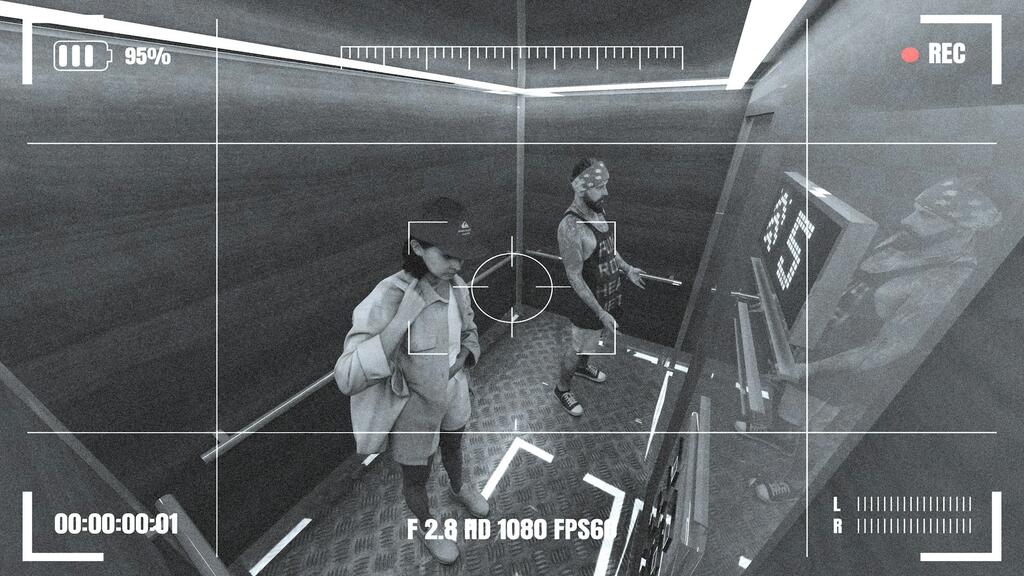
Lift CCTV is one of those jobs that looks simple until it is not. A camera in the lift car, a recorder somewhere in the building, and a transmission path between the 2. In practice, most of the problems on lift CCTV jobs come from that transmission path.
This guide covers the planning decisions that matter before you start a lift CCTV installation, with a focus on wireless transmission. Wireless is often the most practical approach on lift jobs, but it is also where installers run into reliability problems if the link is not planned properly.
Why lift CCTV is a different problem from standard CCTV
A fixed CCTV camera is straightforward by comparison. Once the camera is mounted, your main concerns are lens choice, lighting, mounting height, and cable route.
A lift camera adds a moving environment. The camera travels up and down the shaft all day, so the signal has to be bridged between the moving lift car and the fixed building structure. That can be done by cable in some cases, but on many retrofit jobs wireless is the more practical option.
The challenge is that a lift shaft is not a normal wireless environment. It is a confined, heavily reflective structure, and that changes how you should think about signal planning. The wider fundamentals are covered in our post on wireless IP transmission for CCTV, but lift shafts add a layer of complexity on top.
The lift shaft is not a friendly wireless environment
A lift shaft is effectively a narrow vertical space surrounded by metal, concrete, machinery, guide rails, and a moving metal car. That creates a very different RF environment from a standard open-air wireless link.
Metal reflects and attenuates radio signals. The lift car itself can behave like a partial Faraday cage, weakening or distorting the wireless path. As the car moves, the radio environment changes slightly with it. That is why a wireless link that looks fine on paper can become unstable in practice if the equipment or mounting positions are not chosen carefully.
Wireless can absolutely work in a lift, but it works best when the equipment is chosen for the environment rather than treated like a generic point-to-point outdoor bridge.
Choosing the right wireless transceivers for lift use
Not every wireless unit is a good fit for a lift application. Many standard long-range wireless products are designed for open, line-of-sight outdoor links. A lift shaft is the opposite of that.
For lift installations, it usually makes more sense to choose compact wireless IP transceivers designed for shorter distances and more controlled installation conditions. You also want equipment that can cope well with multipath reflection, because that is one of the main problems inside a shaft.
When specifying equipment, think about:
Suitability for short-range use rather than unnecessary long-range power
Stable performance in confined or reflective environments
Compact mounting options for the car side
Power requirements and whether PoE is practical
Mechanical robustness if installed in dusty or awkward plant areas
You can browse suitable wireless IP transceivers for this kind of work before finalising the design.
Where to mount the transceivers
Placement is one of the biggest factors in whether a lift wireless link is stable or frustrating.
The transceiver on the lift car should be mounted so that it has the cleanest possible path into the shaft space rather than trying to transmit through unnecessary metalwork. In many cases, mounting on or near the roof of the car is the most practical option, provided it is protected and does not interfere with lift equipment or maintenance access.
The fixed transceiver should be positioned where it has the clearest possible view of the lift car throughout travel. On many straightforward jobs, that means mounting at the top of the shaft or in the machine room area looking down the shaft. On taller lifts or more awkward layouts, the positioning may need more thought and testing.
Even small changes in mounting position can have a noticeable effect. If the unit is too close to steel structure, or if the antenna is badly oriented, signal quality can suffer even when signal strength appears acceptable.
Power supply in the lift car
Power and transmission are separate parts of the job, and the power side needs planning early.
Many lift cars already have power available for car lighting and controls, but that does not automatically mean you can simply tap into it for CCTV equipment. Before you spec the job, establish what is actually available in the car and what the lift maintenance company will permit.
If separate power needs to be taken to the lift car, that usually has to be discussed with the lift engineer or maintenance provider in advance. Work involving the shaft or car top is not something to assume access to without agreement.
On the fixed side, power is normally much simpler. If you are using PoE-powered equipment, make sure the switch or injector has enough power budget. Our guides on PoE power budgeting part 1 and PoE power budgeting part 2 are useful if you are checking load and power planning for the system.
Suitable CCTV power supplies and PoE switches can then be selected for the fixed equipment side.
Camera selection for the lift car
Inside a lift car, the objective is usually full interior coverage from a single camera. A wide-angle lens is common, and in some cars a fisheye or very wide fixed lens works well.
A few practical points matter here:
Use a vandal-resistant camera, especially in public, housing, or commercial environments
Choose good low-light performance rather than relying heavily on infrared in a reflective metal interior
Keep the camera position high enough to give full coverage without easy tampering
Consider whether audio is actually needed before specifying it
If audio is being considered, be careful. The ICO’s current guidance says audio recording is generally more privacy-intrusive than visual recording, and organisations should not normally use surveillance systems to directly record conversations between members of the public. Audio capability should generally be switched off by default unless there is a stronger and well-documented justification.
For most lift jobs, a quality wide-angle dome or turret from the IP CCTV cameras range will be the most practical approach.
Connecting back to the recorder
Once the wireless link is established, the fixed transceiver hands the signal off as normal IP traffic. From there, it needs to get back to the NVR or network.
In some buildings, that will mean a simple Cat5e or Cat6 run to the recorder or switch. In others, the NVR may be in a separate comms room or security room elsewhere in the building. As long as the network path is planned properly, that is not a problem.
If the route back to the recorder is awkward, CAT5 transmission and baluns explained is worth reading if you are considering how to make use of existing structured cabling routes.
Remote access is also something many building managers now expect. If the client wants remote viewing or management, our post on remote access without headaches covers the practical setup side.
Working with lift engineers and building management
This part is easy to underestimate, but it is one of the most important parts of the job.
A lift is specialist equipment with its own maintenance regime, safety procedures, and access controls. HSE guidance is clear that maintenance work on lifting equipment should be undertaken by competent personnel and in accordance with the manufacturer’s instructions and a safe system of work, and that work affecting safety elements must not compromise safe operation.
That means you should establish early:
Who the lift maintenance company is
Whether they need to attend or approve access
Whether the work requires a shutdown window
What restrictions apply to the shaft, car roof, or machine room
Who confirms the lift is safe to return to service after the work
If you are pricing the work properly, build those assumptions into your proposal. Our article on tender-ready CCTV proposals is useful for presenting access assumptions and responsibilities clearly.
Reliability depends on planning, not guesswork
The biggest mistake on lift CCTV jobs is assuming that a generic wireless kit will probably work once it is mounted somewhere roughly sensible.
In reality, lift jobs reward proper planning. That means choosing transceivers suited to the environment, positioning them carefully, thinking through the power route, coordinating properly with the lift company, and testing the link throughout the full travel of the lift before signing the job off.
If you get those parts right, lift CCTV can be very reliable. If you rush them, you can end up with intermittent dropouts, maintenance callbacks, or a client who loses confidence in the system very quickly.
A reliable supply chain matters on lift jobs
Lift shutdown windows are often tight. If you only have a short access slot, the last thing you want is to discover that a key part is missing or wrong.
That is why it helps to source the camera, wireless equipment, switchgear, and accessories from a supplier that stocks the range properly and can support trade installers with fast turnaround. FVS CCTV’s product range includes wireless transmission, IP CCTV products, and a broad mix of supporting parts and accessories.
For ancillary parts, connectors, mounting items, and accessories, the CCTV parts wholesaler range can help keep the whole job on one account.
FAQs
Can standard Wi-Fi cameras be used in a lift?
Not usually as a professional solution. Consumer Wi-Fi cameras are designed to connect to a conventional local Wi-Fi network, which is not the same thing as a properly planned point-to-point wireless link in a moving lift environment. Dedicated wireless transmission equipment is generally far more reliable for this application.
Do I need to inform the lift maintenance company before installing CCTV in a lift shaft?
In most cases, yes. Work in or around the shaft, machine room, or car roof should be coordinated with whoever maintains the lift, because access, shutdown procedures, and safe working arrangements all need to be controlled properly. HSE guidance on lift maintenance and lifting equipment supports the need for competent control of this kind of work.
How many cameras do I usually need for a standard passenger lift?
Most standard passenger lifts can be covered by a single wide-angle camera mounted high in a corner of the car. Larger cars or more demanding evidential requirements may justify a second camera, but 1 is often enough.
What resolution should I specify for a lift camera?
For many lift interiors, 2MP is still enough for practical identification at close range. If the client expects tighter facial detail or wants more flexibility in digital zoom, 4MP may be worth considering.
Is there a risk of the wireless link dropping while the lift is moving?
Yes, if the link is badly planned. A properly specified and positioned wireless link should remain stable throughout travel, but poor antenna placement, signal reflection, and awkward metal obstructions can all cause dropouts if they are not addressed.
Does a lift camera need to comply with specific CCTV rules?
Yes. General UK data protection rules and ICO video surveillance guidance apply to lift cameras in the same way they apply to other CCTV systems. If audio recording is included, the privacy justification needs to be particularly strong because the ICO treats audio as more intrusive than video alone.
Spec your lift CCTV job with confidence
Lift CCTV done properly is reliable, unobtrusive, and easy for the customer to live with. The difference usually comes down to getting the wireless link, camera choice, power arrangement, and access planning right before installation starts.
FVS CCTV supplies trade installers across the UK with wireless IP transceivers, IP cameras, IP CCTV NVRs, PoE switches, and the supporting accessories needed to complete a lift installation from a single source.
Browse the full wireless CCTV range and IP CCTV products, or get in touch to discuss a specific job.
For trade pricing and availability, call 0208 863 0666 or contact us online.