
Understanding the FY2026 NDAA Updates and What They Mean for UK Security Installers
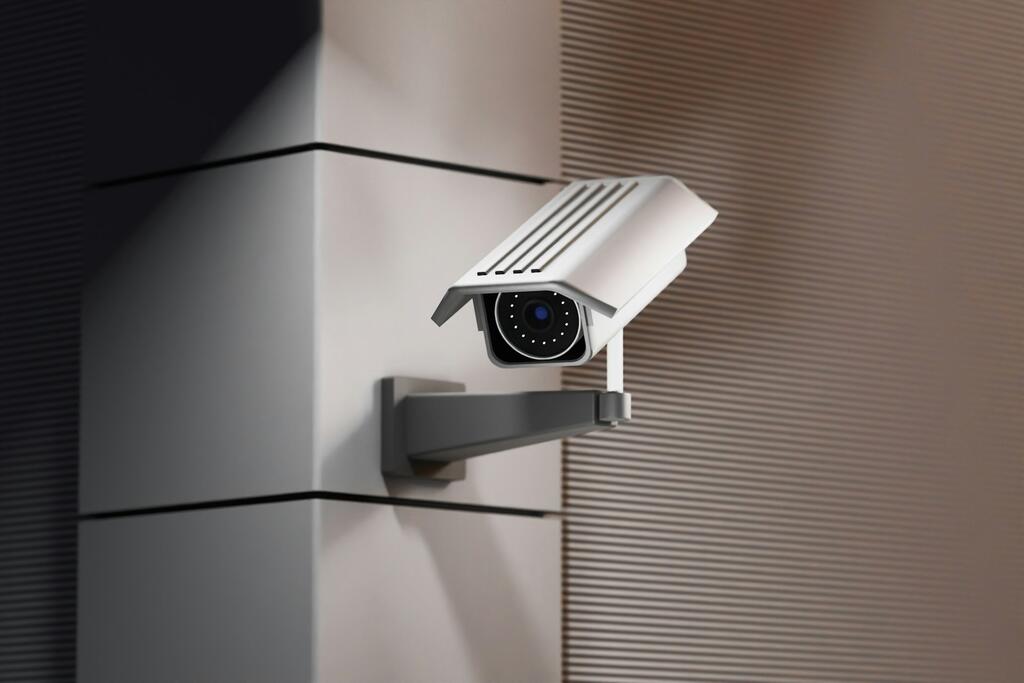
The National Defense Authorization Act for Fiscal Year 2026 was signed into law on December 18, 2025. For UK security installers, a piece of US federal legislation might seem irrelevant — but the NDAA has direct consequences for the equipment you specify, the tenders you compete for, and the customers you serve. Here's what's actually changed and what it means in practical terms.
What the FY2026 NDAA reinforces on surveillance equipment
The core provision affecting the CCTV industry — Section 889, introduced in the 2019 NDAA — remains firmly in place. It prohibits US federal agencies and their contractors from procuring or using video surveillance and telecommunications equipment from Hikvision, Dahua, Huawei, ZTE, and Hytera, including any subsidiaries, affiliates, or OEM products built on their components.
FY2026 reinforces these bans without softening. If you are installing a security system on a federally funded or government-contracted site, you cannot use blacklisted components or chipsets — regardless of the brand name on the front of the unit.
That last point is the one most installers still underestimate. Identifying non-compliant cameras is not straightforward, because Hikvision and Dahua are the original equipment manufacturer for many other well-known security brands. A camera sold under an unfamiliar or even reputable-sounding brand may still be built on a non-compliant chipset. Supply chain transparency — knowing exactly what's inside the products you're installing — is what compliance actually requires.
What's new in FY2026 beyond Section 889
The FY2026 NDAA consolidates, harmonises, and accelerates national security enforcement tools across capital, technology, and supply chains — unlike earlier NDAAs that layered discrete authorities atop existing frameworks. Several new provisions are relevant to the physical security industry.
Section 850 — expanded computer and component restrictions. Section 850 establishes restrictions on the procurement of computers and printers where the manufacturer is owned or controlled by China. This restriction applies based on who owns or controls the company, not solely the location of manufacturing or final assembly. The same logic extends to cameras and embedded components — meaning the question is not "where was this made?" but "who owns and controls the company that made it?"
Supply chain documentation requirements. The FY2026 NDAA requires the DoD to continue implementation of the Supply Chain Illumination programme, under which major systems contractors must submit information about their supply chains. The practical implication is that digital records of what's in the systems you install are becoming a standard expectation — not just a compliance checkbox but a documented audit trail.
Section 842 — battery sourcing restrictions. Section 842 limits procurement of batteries from foreign entities of concern, including companies controlled by China, Russia, Iran, or North Korea. For security installers, this matters where battery-backed or solar-powered remote camera systems are involved — check the battery supply chain as well as the camera and recorder.
Why UK installers need to understand US law
The NDAA is US legislation. It does not apply to private UK commercial installations as a matter of UK law. But that framing misses why it matters.
As a Five Eyes partner, the UK and US share intelligence and increasingly align security procurement standards. The UK government's own position — directing departments to remove Chinese surveillance cameras from sensitive sites, with a compliance deadline of April 2025 — mirrors Section 889 in substance even without adopting it by name.
UK public sector tenders are increasingly including NDAA-equivalent requirements as a condition of procurement. Local authorities, NHS trusts, housing associations, and education bodies are specifying that surveillance equipment must not originate from manufacturers listed under Section 889 — not because UK law requires it, but because their procurement teams are following the same logic.
For UK installers with commercial customers who supply US federal contractors, NDAA compliance flows down through the supply chain. Even if you are a non-federal agency, the act prevents federal agencies from doing business with contractors who use banned equipment — meaning even indirect connections to US government contracts can create compliance exposure.
And for any installer bidding on public sector work in the UK in 2026, being clear on NDAA compliance is increasingly the difference between a tender that passes initial scrutiny and one that doesn't.
Our post on NDAA compliant CCTV covers the background in detail — it's worth reviewing alongside this update to understand how the FY2026 changes fit into the longer picture.
The supply chain transparency shift — and what it means in practice
The most significant practical change in FY2026 is the shift in how compliance is evidenced. Earlier NDAA requirements were often met by a supplier declaration that a product was compliant. The FY2026 emphasis on supply chain documentation and digital inventory means the evidential standard is rising.
In practical terms for UK installers:
Asking "is this NDAA compliant?" is no longer enough. You need to understand what documentation your supplier can provide and what the basis of the compliance claim actually is.
OEM products require particular scrutiny. A product that appears to be from a compliant manufacturer but is built on a banned chipset is not compliant — and the responsibility for checking increasingly sits with the specifier, not just the manufacturer.
Document what you install and where it came from. On public sector jobs or any work with potential US-linked contract exposure, keeping a clear record of the equipment spec, the supplier, and the compliance basis is becoming standard practice.
Our post on what's changing in CCTV specs and compliance covers the broader direction of travel on UK compliance requirements and is worth reading alongside the specific NDAA update.
The commercial opportunity this creates
For installers who are already sourcing NDAA-compliant equipment — and who can demonstrate that clearly — FY2026 creates a stronger competitive position, not a burden.
The volume of non-compliant equipment still in place across UK public sector sites represents substantial replacement work. NDAA compliance in 2026 is not a checklist — organisations that understand and operationalise these requirements will protect their infrastructure, win more contracts, and build resilient systems that endure.
If you're putting together a formal tender response that includes compliance documentation, our post on tender-ready CCTV proposals covers how to present your spec and evidence clearly. And if you're sourcing equipment for a compliant spec, our post on how to avoid warranty issues with poor-quality equipment is relevant — NDAA-compliant equipment from reputable manufacturers typically has stronger quality control and firmware support than the alternatives.
As an established ip camera wholesaler supplying trade installers across the UK, FVS CCTV sources the FV-PRO range with supply chain integrity as a baseline requirement. The ip cctv supplier relationship you build with your equipment supplier matters here — a supplier who can confirm compliance clearly and provide documentation is worth more than one who can't.
FAQs
Does the FY2026 NDAA create any new banned manufacturers beyond the original five?
The core list — Hikvision, Dahua, Huawei, ZTE, Hytera — remains unchanged. What's new is the expanded scope of how compliance is assessed, including greater emphasis on component-level and ownership-based scrutiny rather than just brand name.
Does NDAA compliance apply to software and firmware, or just hardware?
Section 889 applies to equipment and services — which includes firmware. A camera with banned-manufacturer firmware running on otherwise compliant hardware raises compliance questions. This is one reason why firmware source and update integrity matters as part of the compliance picture.
How do I verify that a product is genuinely NDAA compliant?
Ask your supplier for documented confirmation of the supply chain for the specific product — not just a general brand declaration. For the FV-PRO range, FVS CCTV can provide compliance support on request. Browse our NDAA compliant CCTV range as a starting point.
Does the battery restriction in Section 842 affect standard CCTV power supplies?
The restriction applies to procurement within the DoD supply chain rather than to general commercial CCTV installations. However, on projects with US federal supply chain connections, it's worth confirming the battery source on any off-grid or battery-backed system.
Is NDAA compliance going to become legally required in the UK?
The UK government's position has been moving in the same direction without formally adopting the NDAA framework. Whether a UK equivalent becomes statute is unclear, but the practical procurement requirement is already present across a large part of the public sector market.
Build compliant systems with confidence
FVS CCTV stocks a full range of NDAA compliant IP cameras and NVRs wholesale for trade installers across the UK, alongside all the cctv accessories supplier products needed to complete a fully compliant system from one account. Apply for a trade account to access trade pricing, or call us on 0208 863 0666 to discuss a specific compliance requirement. You can also get in touch online and we'll come back to you promptly.