
How HD hybrid systems are helping UK businesses upgrade their security on a budget
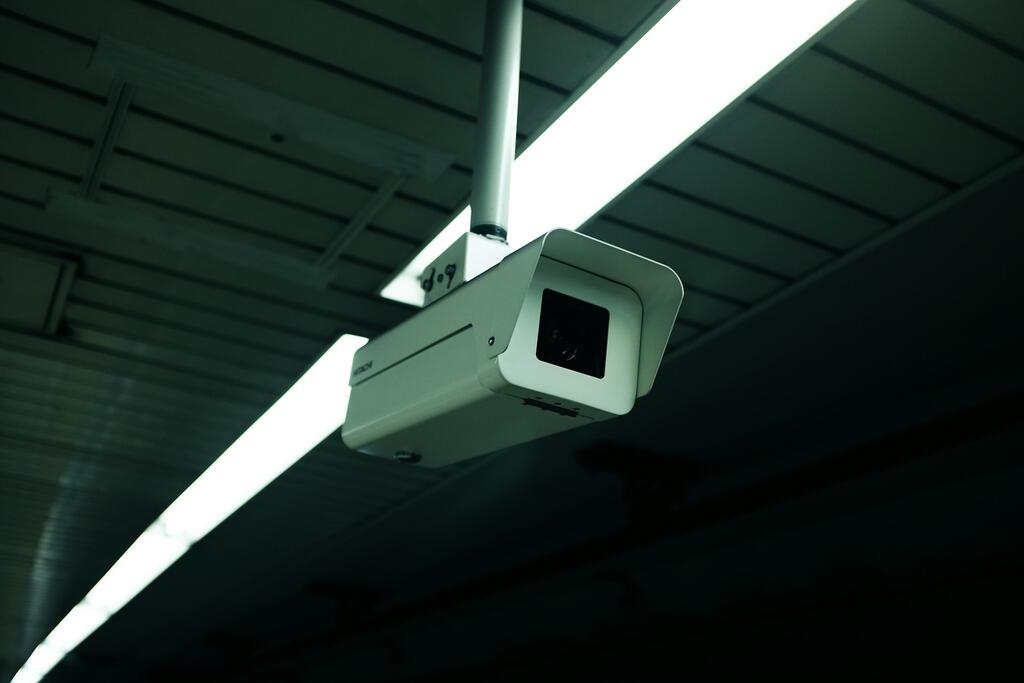
For a lot of UK businesses, the barrier to upgrading their CCTV isn't interest — it's the cost of rewiring. If a site already has coaxial cable running to twelve camera positions, ripping it all out and starting again with Cat5e for a full IP system is an expensive and disruptive project. For many smaller businesses, that cost alone is enough to defer the upgrade indefinitely.
HD hybrid systems remove that barrier. By accepting analogue, HD-over-coax, and IP cameras on the same DVR — over existing cable infrastructure — they let businesses upgrade image quality and system capability without touching the wiring. For installers, they represent a clean, cost-effective route into a large market of sites that would otherwise be hard to convert.
What an HD hybrid system actually is
An HD hybrid DVR is a recorder that accepts multiple signal types simultaneously on the same unit — typically TVI, AHD, and CVI HD-over-coax formats alongside standard analogue and IP cameras. The customer can run existing analogue cameras on some channels while new HD cameras go on others, mixing resolutions and camera types on a single recorder until they're ready to migrate fully.
The FV-PRO HD hybrid range from FVS CCTV includes DVRs available in 4, 8, and 16 channel configurations at resolutions up to 8MP (4K), with H.265 compression to keep storage requirements manageable. The same DVR that runs 1080P analogue-replacement cameras today can run 8MP hybrid cameras tomorrow — the infrastructure grows with the customer rather than needing to be replaced.
Why the cable reuse argument wins the budget conversation
The cost of a CCTV upgrade on a typical commercial site is dominated by labour, not equipment. On a site with existing coaxial cable, reusing that infrastructure for HD-over-coax cameras — rather than pulling new Cat5e to every camera position — can reduce the installation cost substantially.
For a customer who's been putting off an upgrade because of budget, this framing changes the conversation. "We can upgrade every camera to 5MP, connect to a new 4K-capable recorder, and give you remote access via your phone — and because we're reusing your existing cable runs, the project comes in significantly lower than a full IP rewire."
That's a much easier conversation to have than justifying a complete infrastructure replacement. And for installers, it's a route to winning upgrade work on sites that would have been difficult to close on a full IP proposal.
Our post on upgrading from analogue to IP without ripping everything out covers the full range of migration approaches, including when HD hybrid is the right call versus when a full IP transition makes more sense.
The resolution step-up is significant
There's a common assumption among customers that HD hybrid means a compromise on image quality compared to full IP. For sites moving from standard analogue, the reality is the opposite — the step up is dramatic.
Standard analogue cameras typically deliver around 700TVL — equivalent to roughly 0.4MP. Replacing those with FV-PRO 5MP hybrid cameras over the same coaxial cable gives the customer a 12× improvement in pixel count. At 8MP (4K), that increases further. On a site where the existing footage is barely good enough to identify people at close range, the difference is immediately visible and immediately valued.
That image quality improvement, delivered without a full rewire, is one of the clearest return-on-investment arguments available to an installer selling an upgrade. Customers can see the difference in a side-by-side comparison.
From a storage perspective, H.265 compression on the FV-PRO HD hybrid DVRs significantly reduces the data overhead compared to older H.264-based analogue systems — meaning customers often don't need to increase storage capacity substantially despite the resolution jump. Confirm your surveillance hard drive spec matches the recording schedule and channel count before committing the customer to a specific retention period.
Where HD hybrid fits best
HD hybrid works well on a defined set of sites — and being clear about which sites those are helps you avoid the wrong application.
Existing commercial sites with coaxial cable already run. Retail units, light industrial premises, offices, and small warehouses that were originally fitted with analogue cameras are the natural candidates. The cable infrastructure is in place, the camera positions are usually sensible, and the upgrade is largely a swap-and-reconnect job.
Sites with a limited upgrade budget. Where a customer can't justify the cost of a full IP installation but needs a meaningful step up from what they have, HD hybrid delivers that step without the labour cost of rewiring.
Sites where some existing analogue cameras are still serviceable. A hybrid system allows you to replace only the cameras that most need replacing first — covering the critical positions with new 5MP or 8MP units while retaining working analogue cameras on lower-priority channels. This phases the cost for the customer and gives you a natural return visit for the remaining positions.
Sites moving towards IP over time. Because most hybrid DVRs also accept IP cameras on a subset of channels, the system supports a gradual migration. As budget allows, the customer can swap individual positions to IP cameras — served by the same DVR until they're ready for a full NVR-based system. Our IP CCTV camera range and NVRs are designed to make that eventual transition straightforward when the time comes.
A note on cable condition and HD baluns
One thing to check before confirming an HD hybrid installation: the condition and specification of the existing coaxial cable. HD-over-coax signals are more demanding than standard analogue, and cable runs that worked adequately for analogue may show quality issues at higher resolutions — particularly if the cable is old, has joins, or runs close to interference sources.
If the coaxial runs are in reasonable condition and within sensible length limits, HD hybrid over the existing cable will work cleanly. Where you encounter limitations, HD baluns can allow transmission over existing Cat5 infrastructure — a useful option on sites where coaxial runs are poor but Cat5 network cable is available. Our post on CAT5 transmission and baluns explained is worth reading before any job where you're dealing with non-standard cable infrastructure.
Keeping the specification honest
The case for HD hybrid is strong on the right sites — but it's worth being clear with customers about where it sits relative to a full IP system.
HD hybrid gives you excellent image quality, flexible migration options, and lower installation cost on existing infrastructure. It doesn't give you PoE-based power management, the same level of network integration, or the analytics features available on modern IP cameras. For customers who need those capabilities from day one, a full IP system is the right conversation.
For customers who need a meaningful upgrade within a defined budget — which describes a large proportion of the UK SME market — HD hybrid is often the most sensible recommendation, and the one most likely to get signed off. Our post on why cheap cameras cost CCTV installers money long-term is worth sharing with any customer who's tempted to address the budget challenge by cutting camera quality rather than choosing the right system architecture.
As a reliable security camera wholesaler supplying trade installers across the UK, FVS CCTV stocks the full HD hybrid range alongside IP cameras, NVRs, and all the accessories needed to complete either type of installation. Whether you need ip cctv wholesaler products for a full IP job or HD hybrid equipment for a budget upgrade, it's all available on one account, with one delivery.
FAQs
Can HD hybrid cameras use the same coaxial cable as analogue cameras?
Yes — HD-over-coax (AHD, TVI, CVI) transmits over standard RG59 or RG6 coaxial cable. The cable needs to be in reasonable condition and within the supported distance range for the specific camera, but no rewiring is typically required.
What resolution is available on HD hybrid cameras?
The FV-PRO hybrid range covers 1080P (2MP), 5MP, and 8MP (4K) options. Even the entry-level 1080P cameras represent a substantial resolution improvement over standard analogue.
Can I mix analogue and HD cameras on the same hybrid DVR?
Yes — most hybrid DVRs accept standard analogue cameras alongside AHD, TVI, and CVI HD cameras on the same unit. This allows a phased upgrade where only the most important positions are replaced first.
Can a hybrid DVR also connect IP cameras?
Yes — most models support a number of IP camera channels in addition to the HD-over-coax inputs. The exact number of IP channels supported varies by model, so check the spec sheet for the specific DVR you're speccing.
Is HD hybrid suitable for new-build installations as well as upgrades?
It can be, particularly where coaxial cable is already planned or where budget is a primary consideration. On new builds where IP infrastructure is being installed anyway, a full IP system usually makes more sense. For upgrades of existing analogue sites, HD hybrid is often the better fit.
Start your next upgrade job with the right system
If you're regularly quoting on analogue CCTV upgrades and want a cost-effective, high-quality alternative to a full IP rewire, the FV-PRO HD hybrid range is worth having in your standard toolkit. Browse the complete HD hybrid range at FVS CCTV — including DVRs, cameras, and HD baluns — alongside our cctv accessories supplier range and nvrs supplier catalogue for full IP jobs.
Apply for a trade account to access trade pricing across the full range, or call us on 0208 863 0666 to discuss a specific upgrade project. You can also get in touch online and we'll come back to you promptly.